If you are searching for acreage in Keystone, FL, the biggest question is not always how many acres. It is often how much of that land you can actually use. Whether you want room for horses, a workshop, extra privacy, or long-term value, understanding what buyers look for can help you make a smarter move. Let’s dive in.
Usable Land Comes First
In Keystone, buyers often judge acreage by function, not just size. A parcel may sound impressive on paper, but if wetlands, conservation areas, easements, or drainage issues limit where you can build or move around, the property can feel much smaller in real life.
That is why buyers usually look for a clear homesite, practical driveway access, and enough open area for parking, turning, and future use. In Hillsborough County, site planning for accessory structures requires attention to boundaries, existing structures, easements, wetlands, conservation areas, and setbacks. Those are many of the same details buyers want to understand before making an offer.
Keystone’s Rural Setting Shapes Buyer Priorities
Keystone-Odessa is planned as a rural community in northwest Hillsborough County. County planning documents describe the Rural Area as intended for long-term agricultural uses, large-lot rural residential uses, and undeveloped natural areas.
That planning context matters because acreage buyers are not only evaluating a home. They are also evaluating land use, future flexibility, and how a property fits within the area’s rural framework. In Keystone, the parcel itself often carries just as much weight as the house.
Flood Zones and Drainage Matter
Flood risk plays a major role in how buyers view acreage. Hillsborough County notes that flood maps are used to assess property flood risk and that flood risk can affect insurance and building requirements.
For buyers, this means a large parcel may not offer as much usable space as expected once floodplain, drainage patterns, or wet areas are considered. A property with better drainage and a more practical buildable area can attract stronger interest than a larger tract with more limitations.
Access Can Make or Break a Property
Acreage buyers pay close attention to how they enter and use the property. Easy road access, a workable driveway connection, and room for larger vehicles or trailers can all add value.
This is especially important because Hillsborough County requires permits for certain driveway connections and right-of-way work. Buyers also know that easements and access rights can affect how land functions. If a parcel has complicated access or depends on rights-of-way across other land, that can raise questions early in the process.
Horse Buyers Look Beyond the Acre Count
Keystone attracts buyers who want a rural lifestyle, and that often includes horses. For those buyers, pasture quality and drainage can matter more than the total number of acres.
UF/IFAS guidance says a mature horse may need about 1 to 1.5 acres of productive pasture, or 2 to 2.5 acres on less productive land. That means two properties with the same acreage can offer very different value depending on pasture condition, fencing, and how the land drains.
Pasture Features Buyers Notice
Horse-oriented buyers often look for:
- Productive, usable pasture
- Good site drainage
- Fencing that supports pasture management
- Space for rotation or separation
- A practical location for barns or tack areas
In short, buyers want land that supports the lifestyle they have in mind, not just a number on the listing sheet.
Outbuildings Add Value When They Are Clear and Functional
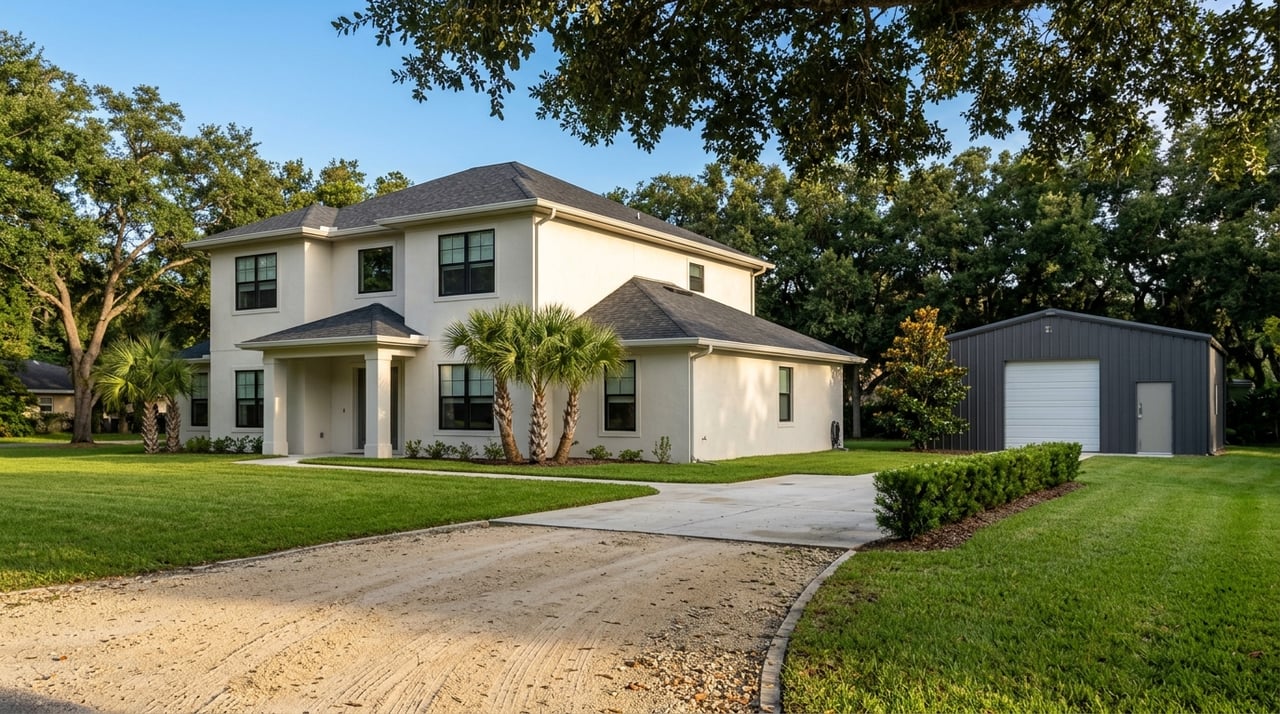
Barns, workshops, sheds, and tack rooms can help an acreage property stand out. Still, buyers tend to respond best when those improvements are easy to understand and properly placed on the site.
In Hillsborough County, accessory structure requirements involve details such as setbacks from property lines. County natural resource review may also apply to land clearing, grading, tree removal, and other land changes. For buyers, that makes documentation important. A useful outbuilding is more attractive when its location and history are easy to verify.
Well, Septic, and Utility Questions Matter
Private systems are a normal part of acreage ownership, so buyers usually ask about them early. They often want to know the condition and status of the well, septic system, drain field, irrigation, and any possible future utility changes.
UF/IFAS notes that septic systems are common in many rural and suburban parts of Florida. On a Keystone acreage property, these systems are part of the property’s daily function, so clear information can help buyers feel more confident.
Surveys Help Buyers Understand the Property
A good survey can answer many of the questions acreage buyers have. It can help show boundaries, access points, easements, and the location of important features such as a septic drainfield.
UF/IFAS notes that a detailed survey showing septic drainfield location is important before construction, irrigation, or landscaping. For buyers, that same level of clarity helps them picture how they can use the land and where future improvements may fit.
Zoning and Tax Status Need Verification
Two acreage properties can look similar but allow very different uses. That is why buyers often verify zoning, future land use, and parcel-specific restrictions before moving ahead.
Hillsborough County directs residents to its Map Viewer for zoning, flood, and future land use information, and the county’s Land Development Code governs how land can be used and developed. Buyers may also look into agricultural classification through the Hillsborough County Property Appraiser, since tax treatment can vary by parcel.
Rural Privacy Still Needs Daily Convenience
Many buyers choose Keystone because they want space and privacy without feeling disconnected from everyday needs. County planning materials identify a Rural Activity Center at Gunn Highway and North Mobley Road that is intended to serve many daily shopping needs while preserving the area’s rural and agricultural character.
That balance is a big part of Keystone’s appeal. Buyers are often looking for a property that feels peaceful and open, while still keeping practical services within reach.
Lifestyle Fit Still Influences Value
Acreage buyers are not only shopping for land. They are also thinking about how they want to live. In Keystone, county planning materials describe uses such as riding stables, equestrian facilities, horse-track support facilities, and private barns on small agricultural properties as part of the community fit.
Local amenities also support that rural lifestyle. Hillsborough County’s Keystone Park & Recreation Center offers youth programs, athletic spaces, and a walkway to Austin Davis Library, while Northwest Equestrian Park includes a six-mile trail used by horseback riders and hikers.
What Makes a Keystone Acreage Listing Stand Out
The strongest acreage listings usually make the property easy to understand. Buyers respond well when the key facts are organized clearly and supported by documentation.
That often includes:
- A current survey
- Clear boundary and access information
- Flood zone details
- Notes about wetlands, conservation areas, or easements
- Well and septic information
- Outbuilding details
- Pasture and drainage information
When buyers can quickly understand the land, they can make decisions with more confidence. That usually helps a property stand out in a more meaningful way than acreage alone.
Why Local Guidance Matters
Buying or selling acreage in Keystone involves more moving parts than a typical residential lot. Land use, access, drainage, outbuildings, flood risk, and parcel-level details all shape value.
That is why local, process-driven guidance matters. If you are comparing acreage properties or preparing one for sale, a clear plan can help you focus on the features that buyers actually care about most. When you are ready to talk through your next move in Keystone, connect with Kristy Thurber for practical, personalized guidance.
FAQs
What do acreage buyers look for in Keystone, FL first?
- Buyers usually start with usable land, including a clear homesite, access, drainage, and how much of the parcel is affected by wetlands, easements, conservation areas, or flood risk.
How much acreage do horse buyers need in Keystone, FL?
- UF/IFAS says a mature horse may need about 1 to 1.5 acres of productive pasture or 2 to 2.5 acres on less productive land, so pasture quality matters as much as total acreage.
Why do surveys matter for Keystone acreage properties?
- Surveys help buyers understand boundaries, easements, access, and important features like septic drainfield location, which can affect how the land is used.
What property details should buyers verify in Keystone, FL?
- Buyers often verify zoning, flood zone, future land use, easements, access, wetlands, conservation areas, and the status of wells, septic systems, and outbuildings.
Why does access matter on acreage in Keystone, FL?
- Access affects daily use, driveway planning, and long-term function, and some driveway connections or right-of-way work may involve county permitting requirements.